






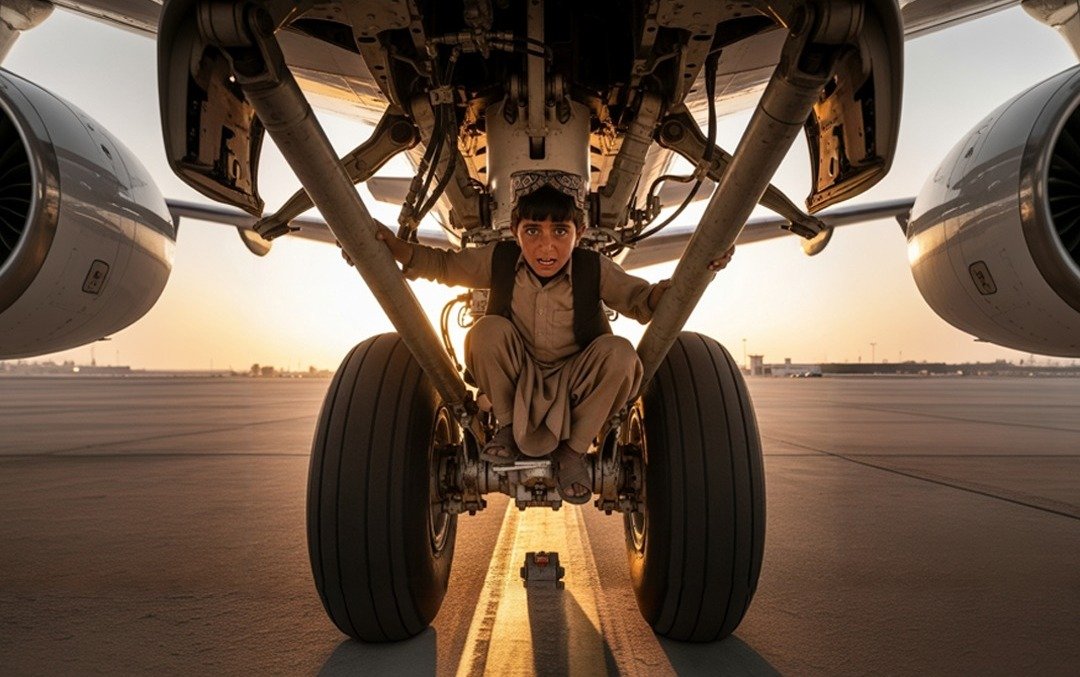
13-Year-Old Afghan Boy Survives 94-Minute Flight Hidden in Landing Gear to Reach India
In a shocking and extraordinary incident, a 13-year-old boy from Afghanistan survived a perilous 94-minute flight from Kabul to New Delhi by hiding inside the landing gear compartment of a commercial aircraft. The boy, who reportedly came from the northern Afghan city of Kunduz, managed to evade airport security and stow away in the rear wheel well of a Kam Air flight — a feat that stunned aviation and security experts alike.
The aircraft, which departed Kabul early in the morning, landed in New Delhi around 10:20 a.m. after a flight lasting approximately an hour and a half. Upon landing, airline staff were startled to find the young boy wandering near the aircraft. Authorities later discovered that he had been hidden in the cramped and dangerous landing gear compartment during the entire journey.
The boy carried nothing with him except a small red-colored portable speaker. During questioning, he revealed that he had mistaken the destination of the flight and believed it was going to Iran, not India. He claimed his motivation was curiosity and a desire to travel, although many speculate that desperation and the current socio-political conditions in Afghanistan may have also played a role in his decision.
What makes the incident even more remarkable is the fact that the boy survived conditions that are typically fatal. The landing gear area of an aircraft is unpressurized and unheated. During flight, temperatures can plummet to as low as -50°C, and oxygen levels drop dramatically at cruising altitudes of 30,000 to 40,000 feet. Experts point out that very few people survive such journeys; most stowaways succumb to hypothermia, hypoxia, or are crushed by the landing gear mechanism itself.
Upon discovery, the boy was immediately taken into custody by Indian authorities and given medical attention. Surprisingly, he did not show any signs of severe physical trauma, though medical staff noted he appeared weak and dazed. After initial questioning, he was handed over to immigration officials, and security agencies conducted a thorough inspection of the aircraft to ensure there was no sabotage or breach that could endanger future flights.
The boy was sent back to Kabul on a return flight later the same day. His presence on Indian soil, though brief, raised serious questions about aviation security protocols — both at Kabul airport and during the flight’s landing procedures in Delhi. Investigations are currently underway to determine how a child was able to breach multiple layers of airport security, access a restricted area, and survive such a hazardous journey.
This incident underscores not only the incredible resilience of the human body under extreme conditions but also the desperation that drives young individuals to risk their lives in search of a better future. It also highlights a pressing need for better security measures at airports, improved surveillance, and more robust protections for vulnerable children in conflict-affected regions like Afghanistan.