



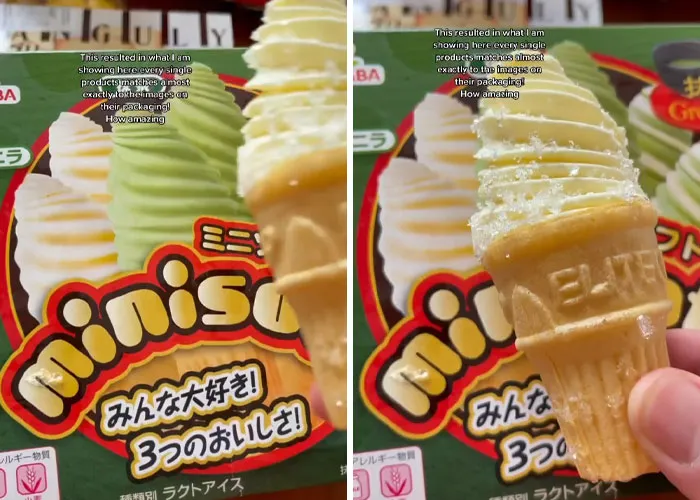
In Japan, food manufacturers must follow strict rules to ensure what’s shown on packaging closely matches the actual product inside. This regulation is part of the Act Against Unjustifiable Premiums and Misleading Representations, which was designed to protect consumers by preventing misleading or exaggerated images.
Under this law, companies aren’t allowed to display food on packaging in a way that makes it look significantly better than the real thing. If the picture includes garnishes, sides, or extra toppings, the actual product must include them, or there must be a note clarifying that what you see isn’t exactly what you’ll get.
This makes Japanese packaging unusually honest. For example, if a snack package shows large, nicely shaped pieces, the actual snack inside should be fairly similar in size and shape. Consumer watchdogs and the Consumer Affairs Agency monitor compliance, and businesses can be penalized for violations.
While many posts on Reddit suggest there is a rigid “law” requiring food and packaging to be identical in size, the reality is more nuanced. The regulation targets misleading representations, not exact life-size photo reproduction.
Still, the high standard of transparency in Japan’s food labeling is widely admired, as it ensures customers feel confident that what they see on the box closely matches what they’re buying.