




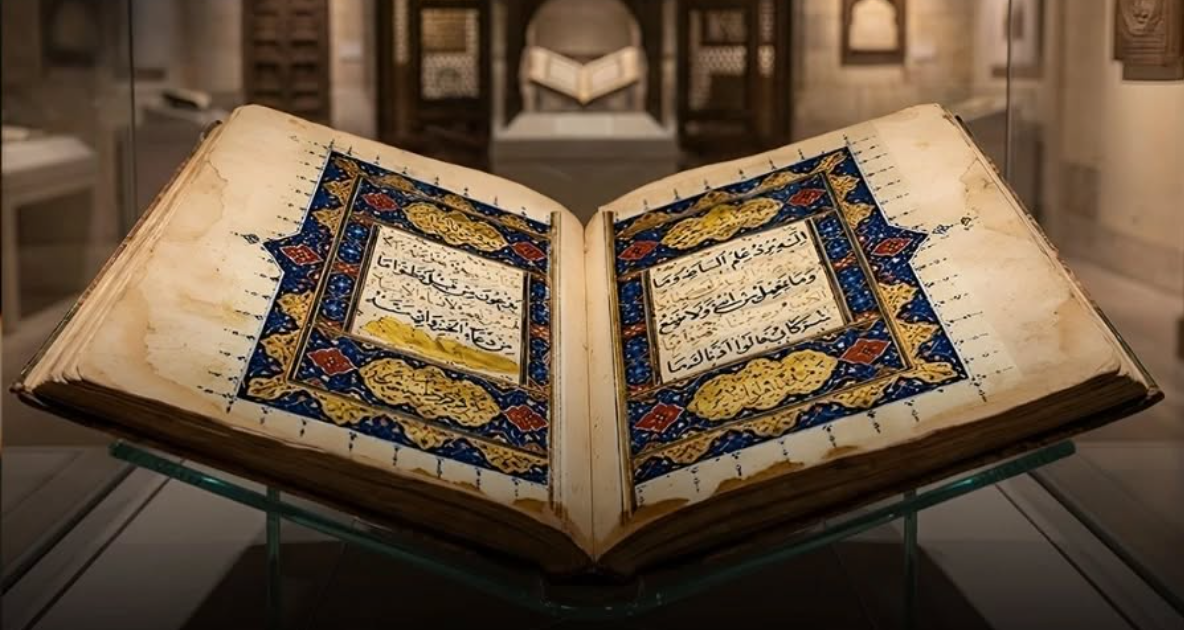
A magnificent Quran manuscript dating back to the 9th century Hijri (15th century CE) is currently on display in Makkah, offering visitors a rare glimpse into Islamic calligraphic artistry and devotional craftsmanship from over 500 years ago.
The manuscript features exquisite gold embellishments and intricate decorative elements characteristic of the period when Islamic art reached remarkable heights. During the 9th Hijri century, corresponding to the 1400s CE, the Islamic world saw flourishing centers of manuscript production in cities like Cairo, Damascus, and Istanbul, where skilled calligraphers and illuminators created masterpieces for royal courts and religious institutions.
These historical Qurans were typically written on high-quality paper or vellum using iron gall ink, with chapter headings, verse markers, and ornamental designs rendered in gold leaf. The painstaking process required teams of specialized artisans—calligraphers for text, illuminators for decoration, and binders for assembly.
According to Islamic art historians, manuscripts from this era often employed the Naskh or Thuluth script styles, known for their elegance and readability. The gold decoration served both aesthetic and spiritual purposes, reflecting the sacred nature of the text while demonstrating the commissioner’s devotion and resources.
The exhibition in Makkah provides an important educational opportunity for millions of pilgrims and visitors. Such displays help preserve Islamic heritage while connecting contemporary Muslims with their rich scholarly and artistic traditions. The manuscript serves as tangible evidence of centuries-old dedication to preserving and beautifying the Quranic text.
Experts emphasize that viewing these historical manuscripts deepens appreciation for the meticulous care previous generations invested in transmitting divine revelation, combining spiritual devotion with extraordinary artistic achievement.