




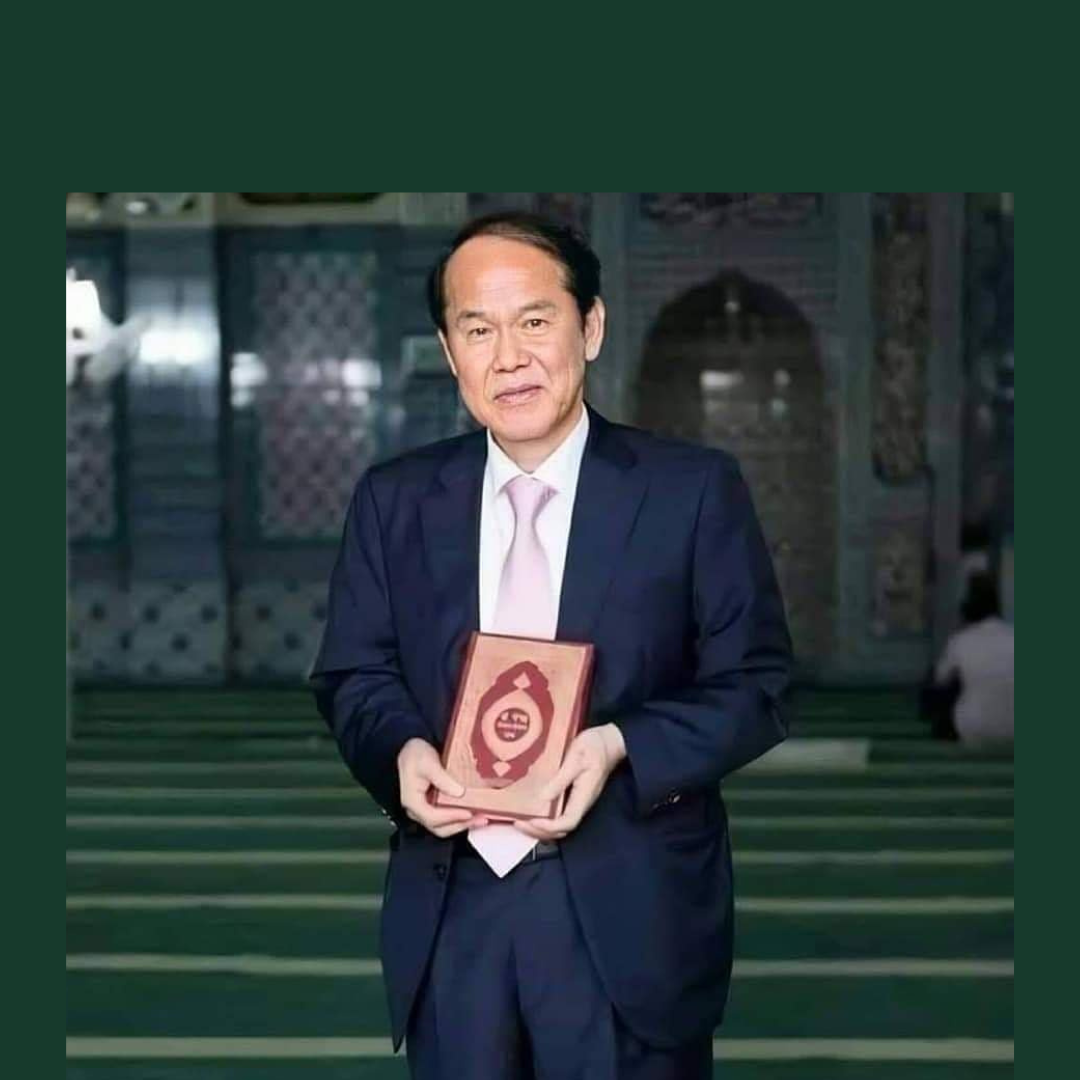
In a monumental achievement for Islamic scholarship in East Asia, Dr. Hamid Choi Yong Kil became the first Korean Muslim to translate both the Qur’an and Sahih al-Bukhari into Korean in 2021. This historic accomplishment took approximately seven years to complete, marking a watershed moment for Korea’s growing Muslim community.
Dr. Choi is currently a professor of Islamic and Arabic studies at Myongji University in South Korea, in addition to being a preacher and serving as chairperson of the Korea Muslim Federation (KMF). His work on the Qur’anic translation was conducted under the guidance of the King Fahd Complex for the Printing of the Holy Qur’an, ensuring the highest standards of accuracy and authenticity.
A Scholar Respected Across Borders
Dr. Choi completed his education at the Islamic University of Madinah when the late Shaykh Abdul Aziz bin Baz served as rector. He held a special position in the Shaykh’s heart and was often invited and entertained at the Shaykh’s house.
Shaykh bin Baz was deeply impressed with him, particularly regarding the depth of his knowledge and moral dignity, a remarkable testament considering Dr. Choi came from a country where Muslims represent a tiny minority.
A Lifetime Dedicated to Islamic Scholarship
Beyond his groundbreaking translations of the Qur’an and Sahih Bukhari, Dr. Choi has authored or translated more than 90 additional books in various Islamic disciplines, contributing significantly to making Islamic knowledge accessible to Korean speakers.
This achievement comes at a crucial time as South Korea’s Muslim population is gradually growing. According to estimates by the Korean Muslim Federation, there are currently about 200,000 Muslims in South Korea, representing only 0.38 percent of the overall population. Dr. Choi’s translations provide this minority community and interested non-Muslim Koreans with direct access to Islam’s primary sources in their native language for the first time.
His dedication exemplifies how one scholar’s commitment can bridge cultures and make divine guidance accessible across linguistic boundaries.