
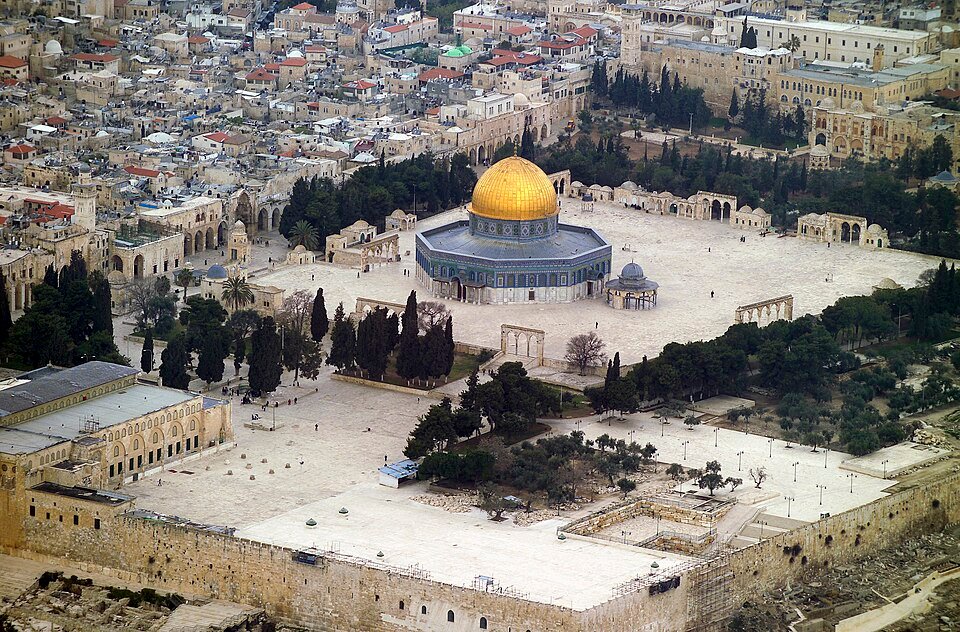



In one of the most heartbreaking scenes in recent Islamic history, Al-Aqsa Mosque in Jerusalem marked Eid ul Fitr 2026 with its courtyards empty, shut by Israeli authorities for the first time in 60 years.
In an unprecedented move, Israel barred Muslims from entering Al-Aqsa Mosque on Eid al-Fitr, marking the first closure of the holy site in 60 years. Thousands of worshippers, who traditionally gather inside the mosque for Eid prayers, were forced to pray outside the Old City gates. Despite the gunfire, the streets resonated with Takbeer as Muslims performed their prayers in open areas.
Al-Aqsa Mosque was closed by Israeli authorities, citing the security situation amid the US-Israeli war on Iran. The unprecedented closure, particularly during the month of Ramadan, was condemned by Palestinians as the latest attempt by Israel to exploit security tensions to consolidate control over Al-Aqsa.
A guard at Al-Aqsa Mosque delivered an emotional message as the compound remained closed, saying: “There is no one. The gates are closed. The courtyards are empty.” Unable to enter the site, hundreds of Palestinian residents gathered in nearby streets to perform prayers near Damascus Gate and Bab al-Sahira Gate.
Al-Aqsa Mosque had been closed for 21 consecutive days. The Jerusalem Governorate condemned the closure as a dangerous escalation and a direct assault on religious freedom, saying the measures aimed to impose new realities and isolate the mosque from its Palestinian and Islamic surroundings.
The sound of Takbeer still echoed through the empty stone courtyards, a testament to the unbreakable faith of the Palestinian people even in their darkest moments.