




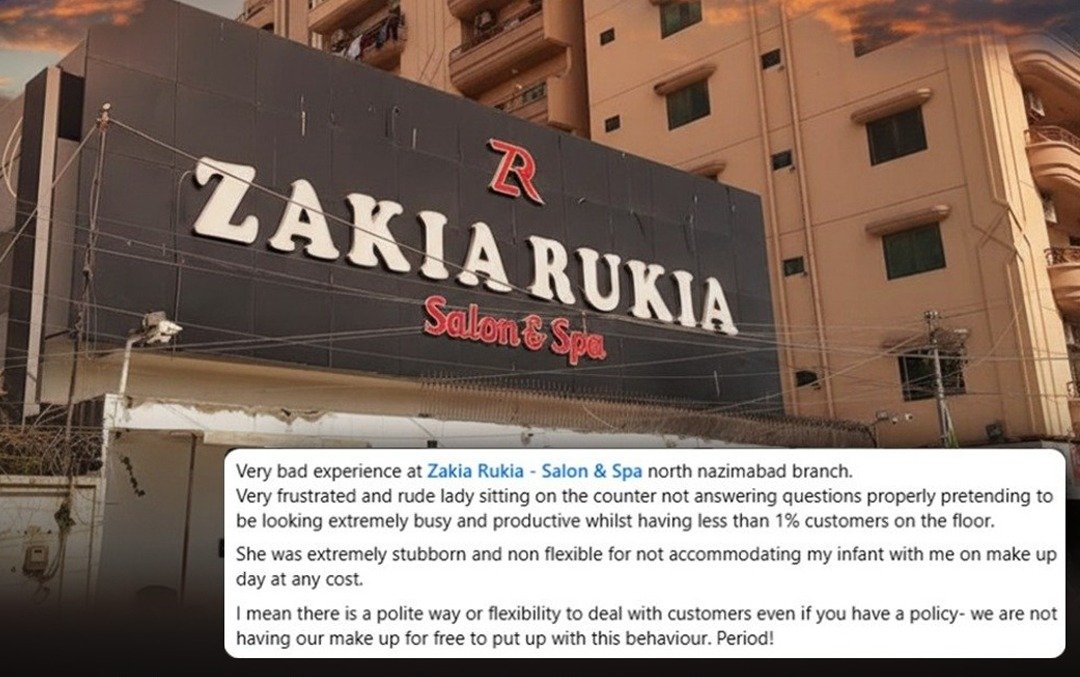
A recent customer experience at Zakia Rukia Salon & Spa in Karachi has sparked concern over the salon’s customer service standards. A frustrated client, who expected professional courtesy and flexibility, left deeply disappointed after what she described as poor service, rude behavior, and an unaccommodating attitude from the salon staff.
The customer shared that while she understands every business has its own policies—particularly regarding complimentary services or discounts—there should still be room for polite communication and respectful handling of client concerns. “There is a polite way and flexibility to deal with customers,” she said. “Even if you have a policy that makeup or other services aren’t free, that doesn’t justify rude or dismissive behavior. Period.”
According to the customer, the issue began when she requested minor adjustments to her makeup before a special event. Rather than offering a courteous explanation or alternative, the staff allegedly responded in a harsh and defensive tone. The incident left the client feeling disrespected and embarrassed in front of others present at the salon.
Such experiences highlight a broader issue within the beauty and service industry—the critical importance of customer relations and communication. In a competitive market like Karachi’s, where dozens of high-end salons compete for clientele, customer satisfaction often depends less on the service itself and more on how customers are treated. A calm, understanding approach can turn a complaint into an opportunity for improvement, while poor handling can quickly damage a business’s reputation.
The dissatisfied customer emphasized that she had been a loyal patron and had recommended the salon to others in the past. However, after this unpleasant experience, she expressed hesitation about returning. “It’s not just about the money,” she said. “It’s about respect. A customer should never feel insulted for asking a question or seeking clarification.”
Experts in customer service agree that empathy, active listening, and polite communication are essential in maintaining long-term relationships with clients. Businesses are encouraged to train their staff to respond to criticism or requests with professionalism, even when policies restrict certain actions.
The incident at Zakia Rukia Salon & Spa serves as a reminder that professionalism goes beyond skill—it’s about attitude. While maintaining policies is important, the delivery of those policies matters just as much. Customers value honesty and clarity, but they also expect warmth, understanding, and respect.
As Karachi’s beauty industry continues to grow, customer expectations are rising in tandem. Salons that invest in staff training, conflict resolution, and effective communication will likely stand out as leaders in service excellence. For Zakia Rukia Salon & Spa, this incident could be an opportunity to reflect, retrain, and rebuild trust with its clientele.
After all, in the world of beauty and wellness, a kind word and a little flexibility can go a long way toward keeping customers satisfied—and loyal.