


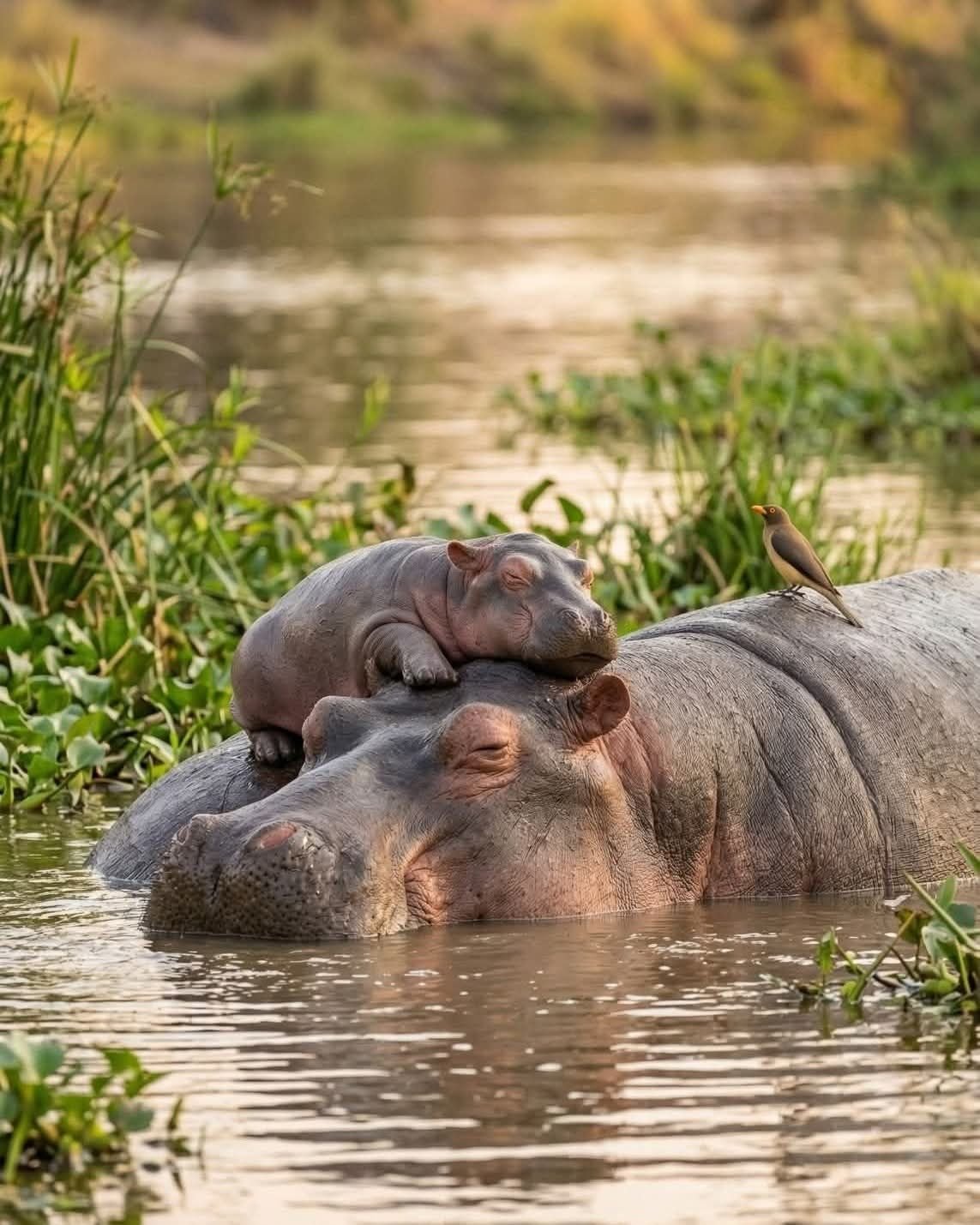

One of nature’s greatest illusions is the hippopotamus, an animal that looks like a massive ball of fat but is actually one of the most muscular creatures on Earth. This surprising biological fact has recently caught the attention of millions on social media.
Despite their bulky appearance, hippos have a low body fat percentage, typically 2% to 5%. Their immense weight, up to 3,200 kilograms for males, comes primarily from substantial muscle and thick skin. The skin alone can be up to 6 centimetres thick, providing a robust protective layer.
Hippos have around 65% muscle mass, an ideal amount for a wild bull hippo. This is an ideal body frame, with minimal body fat, which is also the ideal amount of muscle for survival.
Hippos are primarily herbivores, grazing on grasses at night. An adult can consume 40 to 50 kilograms of grass nightly. This fibrous diet contributes to their large muscle mass and body size, with no significant fat accumulation.
Despite their bulky and heavy appearance, hippos’ subcutaneous fat layers are quite thin. The 2,000-kilogram giant is mostly made up of muscles, and their skin alone is 6 centimetres thick.
This gigantic muscle mass makes hippos very strong, but the added weight doesn’t slow them down. Despite their size, hippos can reach 30 kilometres per hour over short distances.
The hippo is a remarkable reminder that appearances can be completely deceiving, nature’s chunkiest-looking animal is, in fact, a powerhouse of pure muscle.