

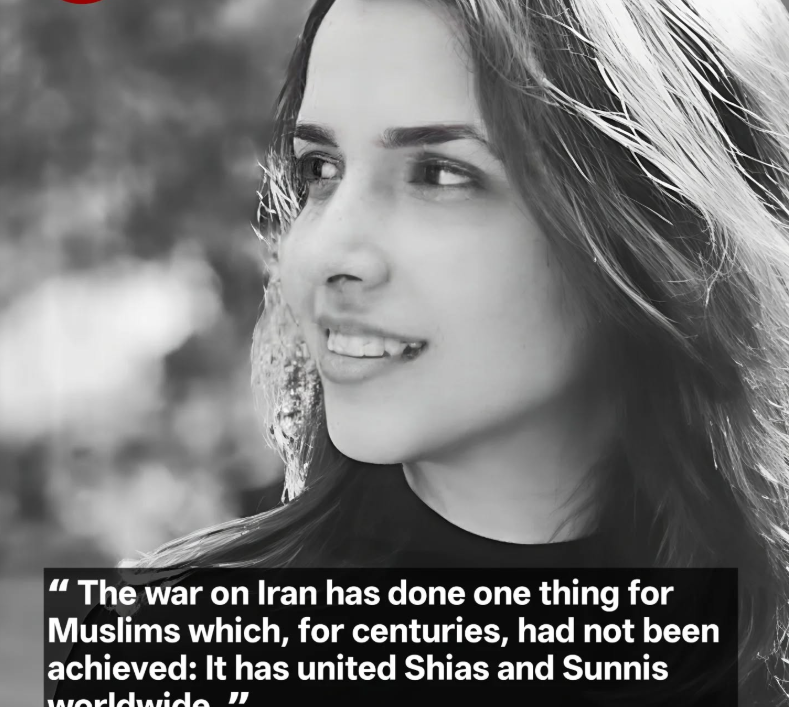



Pakistani political analyst, Zainab Sikandar has made a powerful and thought-provoking observation about the ongoing war on Iran, one that has resonated deeply with millions of Muslims across the world.
In a widely shared post, Zainab pointed out that while the war has caused immense destruction and grief, it has also done something remarkable, something that centuries of religious division, political rivalry, and sectarian conflict had failed to achieve. It has brought Shia and Sunni Muslims together in a shared feeling of pain, solidarity, and brotherhood.
Her words carry real weight given the current situation. Joint US-Israeli military strikes began on February 28, 2026, targeting Iran’s nuclear and missile facilities and reportedly killing Iran’s Supreme Leader Ayatollah Ali Khamenei. The scale of the attack shocked the entire Muslim world, not just Shia communities.
Many Shia Muslims perceive the strikes as directed against their entire community, but protests and grief have spread rapidly across Pakistan, Iraq, and Lebanon among both sects. Analysts have noted that as far back as 1979, both Sunni and Shia Muslims had shown the ability to unite around the idea of sovereignty rather than sect when faced with external aggression.
For decades, the Shia-Sunni divide was one of the deepest fault lines in the Muslim world. The Middle East’s religious conflicts are not simply ancient feuds, they are modern political struggles shaped by history, identity, and political interests.
Yet today, mosques across Pakistan, social media feeds from Indonesia to Morocco, and streets from Karachi to Beirut tell the same story, Muslims standing together.