




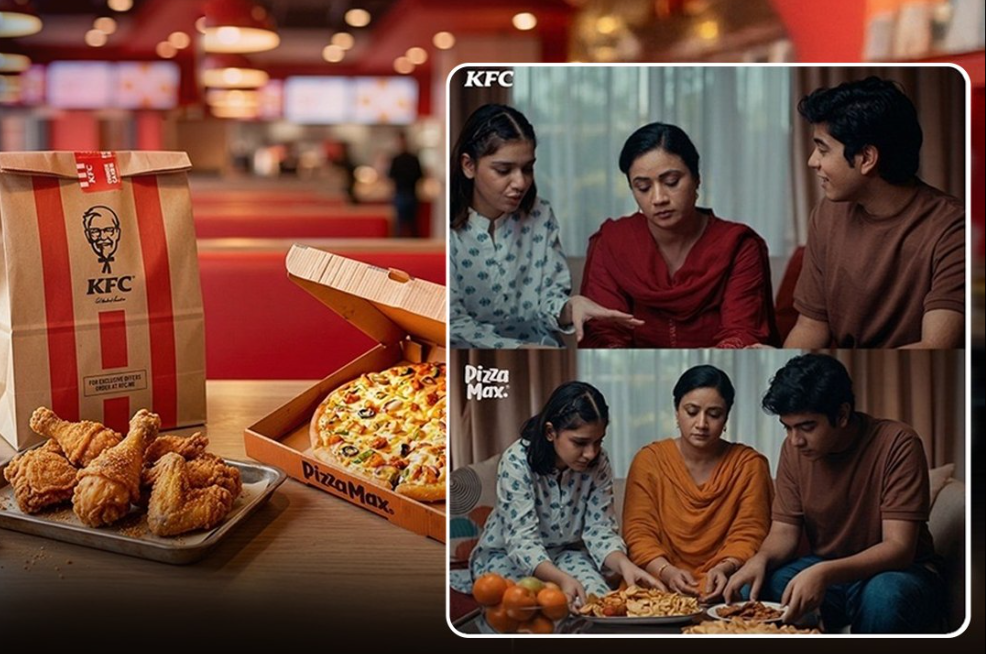
Pakistan’s food industry is no stranger to competition, but this Ramadan, local pizza chain Pizza Max has found itself at the centre of a heated debate, one that has nothing to do with taste, and everything to do with creativity.
Social media users in Pakistan have gone viral, pointing out striking similarities between Pizza Max’s latest Ramadan advertisement and KFC Pakistan’s Ramadan campaign. Screenshots and side-by-side comparisons shared widely on Instagram, X (formerly Twitter), and Facebook show near-identical visual compositions, from the warm lighting and family iftar table settings to the emotional storytelling format, camera angles, and even the colour palette used in both ads.
This kind of advertising controversy is not new in Pakistan’s fast food industry. Research has shown that KFC Pakistan’s advertising strategy heavily integrates culturally familiar elements and religious occasions like Ramadan to build deep emotional connections with Pakistani consumers. It appears Pizza Max may have studied that playbook a little too closely.
Marketing professionals in Pakistan quickly weighed in online. Many pointed out that inspired advertising is common globally, but copying a competitor’s campaign frame by frame crosses a clear professional and ethical line. It reflects poorly not just on the brand, but on the creative agency behind the work.
Ramadan is the single most competitive advertising season in Pakistan. Brands spend months and significant budgets crafting campaigns that emotionally connect with audiences during the holy month. When one brand copies another’s emotional narrative, it undermines the original effort and dilutes the sincerity of the message.
Pizza Max has not issued a public response to the controversy. Meanwhile, the debate has reignited a broader conversation about originality, creative integrity, and ethical standards in Pakistan’s rapidly growing advertising industry.