


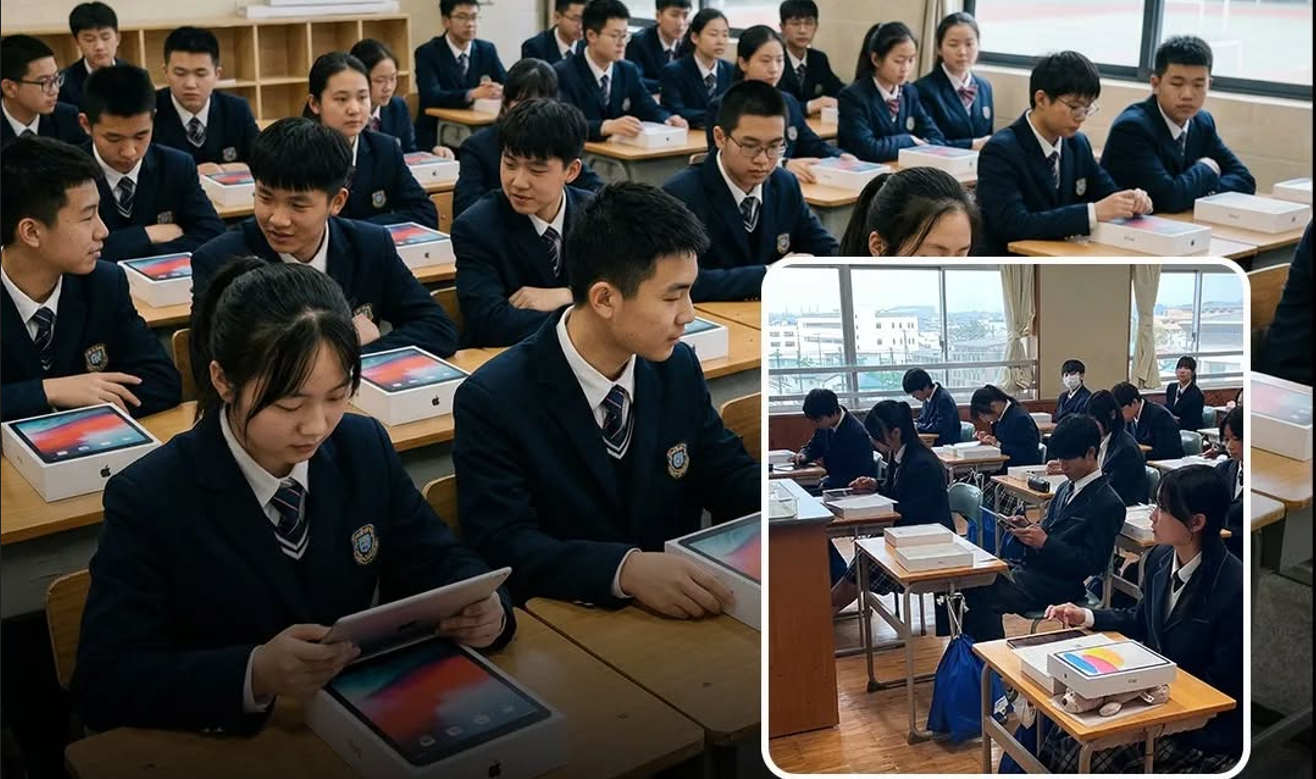



China has been making big changes in how students learn. The country is pushing hard to bring digital technology into classrooms, replacing heavy textbooks with tablets and smart devices.
By the end of 2020, all elementary and junior high schools in China had been connected to the internet, compared with just 25 percent in 2012. By 2021, 99.5 percent of schools had built multimedia classrooms.
China launched the “Smart Education of China” platform in 2022, which provides high-quality educational resources for schools, particularly in less developed rural regions. By the end of 2023, over 519,000 educational institutions had linked to the platform, benefiting 18.8 million teachers and 293 million learners.
Tech companies like iFlytek and Baidu are now part of a growing industry building AI-powered educational tablets designed for learning. The software on these devices is often locked, meaning children cannot download games or use entertainment apps. Instead, the tablets come loaded with learning tools powered by AI, including chatbots for English practice, quiz tools, and homework-checking features.
One major benefit is reducing the weight students carry. Research found that around 80 percent of primary school students carry overweight school bags, which can cause back pain and curved spines. Going paperless means students would only need to carry a tablet weighing around 480 grams instead of several heavy textbooks.
However, experts warn of risks including screen addiction, falling eyesight, and data privacy concerns for students. China’s digital education push continues to grow, but balancing technology with traditional learning remains a challenge.